Felt & Torch-On Roofing across Leeds
When most people picture a felt roof, they picture a thin black sheet nailed onto a shed, cracking after a few winters. Today's flat roof felt systems are built differently. The sheets have a polyester reinforcement core and are coated in modified bitumen that stays flexible, and they are laid as a system: a base or underlay sheet bonded to the deck, then a cap sheet on top with a mineral surface to protect it from sunlight.
Felt systems are still widely used on larger domestic roofs, shops, flats and commercial units because they cope well with complicated layouts, join neatly to existing felt roofs and can be laid in cooler weather than some alternatives. They are also easy to repair later with matching materials.
Torch-on felt is bonded by melting the underside with a gas torch. It forms a very strong bond, but a naked flame on a roof needs care, especially near timber fascias, eaves and loft spaces. Where a flame is not suitable, self-adhesive or cold-applied felt systems do the same job without hot works, and we choose between them for each roof.
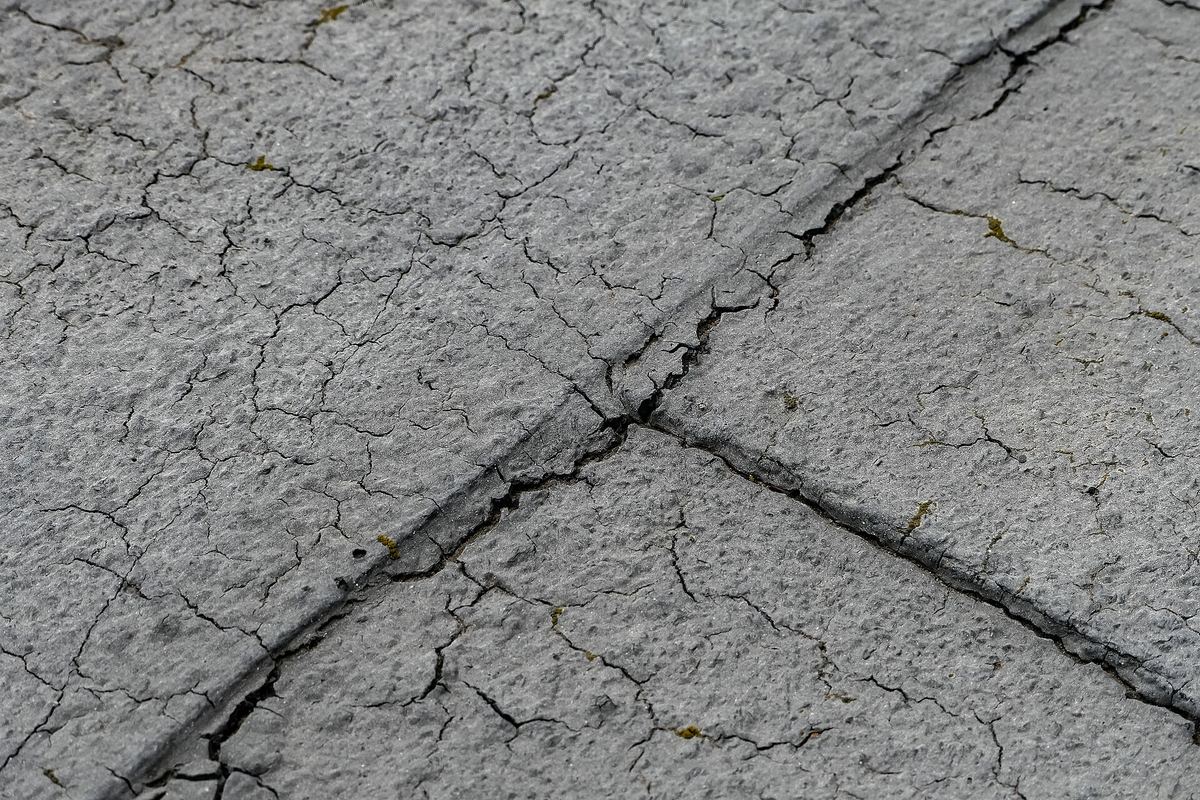
Signs an old felt roof is coming to the end
- Bare black patches where the mineral chippings have washed off
- Cracks in a crazy-paving pattern across the surface
- Blisters, some of them split open
- Laps that have curled up at the edges
- Felt that has slipped or sagged down an upstand or over the edge
- Grit from the surface collecting in the gutter
- Patches and coatings applied over the years in different colours
Why older felt roofs fail
Unreinforced or oxidised bitumen
Older felts used basic bitumen that hardens in sunlight. Once it is brittle, the roof cracks as it moves with the seasons.
Lost surface protection
Mineral chippings and stone dressing protect felt from the sun. Where they have gone, the bitumen underneath wears much faster.
Trapped moisture
Felt laid on damp boards or over trapped water blisters as the sun heats it. Blisters can crack and let rain in.
Thin systems
A single layer of felt, or two thin layers, has little to spare. Modern systems use thicker, reinforced sheets in a base and cap arrangement.
How a reinforced felt roof is laid
1. Prepare the deck
Old layers are stripped and the deck is checked and repaired or replaced. A suitable underlay or venting layer goes down where the system calls for it.
2. Choose the bonding method
We decide between torch-on and cold-applied or self-adhesive sheets for each roof, based on what is around it: timber eaves, the loft, neighbours and access.
3. Base sheet
The base sheet is bonded to the deck with laps staggered and sealed, turned up at walls and kerbs.
4. Cap sheet
The mineral-surfaced cap sheet goes on top, with its laps offset from the layer below so no joint lines up through the roof.
5. Edges and flashing
Edges are finished into trims or welted drips, upstands are capped with a flashing, and outlets are dressed in.
Torch-on and cold-applied felt compared
| Torch-on felt | Self-adhesive / cold-applied felt | |
|---|---|---|
| How it bonds | Underside melted with a gas torch | Factory adhesive or cold bitumen adhesive, no flame |
| Best suited to | Open roofs away from combustible details, larger areas | Roofs near timber eaves, lofts, occupied spaces or awkward access |
| Weather | Bonds well in cooler weather | Adhesives need a dry surface and some warmth |
| Finish | Mineral cap sheet | Mineral cap sheet |
| Repairs later | Matching reinforced felt | Matching reinforced felt |
Not sure which suits your roof? The material chooser asks five questions and shows how each one fits.
Worth knowing
Hot works are planned
Where torch-on is used, the work follows safe working practice for hot works, with the vulnerable details protected and the area checked before we leave. Where the risk is too high, it is cold-applied instead.
Felt suits mixed roofs
If part of a larger roof is being renewed and the rest is felt, a felt system usually joins to it more neatly than a change of material would.
Colour of the cap sheet
Mineral cap sheets come in a few colours. Most people choose grey or green; the choice is written into the price.
Keep chippings in the gutter in mind
A little loose grit in the gutter after a new felt roof is normal. A lot of grit years later is a sign that the surface is wearing.
Related flat roof work
Flat Roof Replacement
When the boards are soft or the covering has failed all over: stripped to the joists if needed, re-decked, insulated and re-covered.
More on this →Flat Roof Repairs
Splits, blisters, lifted laps and tired upstands put right on felt, rubber and fibreglass roofs, where the deck underneath is still sound.
More on this →Garage Roofs
Single and double garages, detached or attached, timber-decked or old asbestos-cement sheet, re-covered so the car stays dry.
More on this →Lead Flashing on Flat Roofs
The cover between a flat roof and a wall or chimney: cut into the joint, dressed down over the upstand and fixed, not glued.
More on this →Where we do this
Everywhere in the Leeds district. Pages for places where this work comes up a lot: Leeds Centre, Hunslet, Kirkstall, Armley, Harehills, Holbeck. For anywhere else, type your town or postcode into the area finder.
Felt & Torch-On Roofing: questions people ask
- Modern reinforced bitumen systems are. They are tougher and more flexible than the felts many people remember, are laid in at least two layers, and are easy to repair. They are a sound choice for larger and more complex roofs and where a new roof meets existing felt.
- A gas torch is used carefully and only where it is suitable. Near timber fascias, eaves, lofts and anything combustible, cold-applied or self-adhesive felt is used instead, and the roof is checked after work stops each day.
- Occasionally a new cap sheet can go over a sound, dry existing roof. More often the old felt is cracked or blistered and the deck needs checking, so it comes off. We decide on the roof, not over the phone, and explain why.
- It is the top layer of a felt roof system. It has a mineral surface, small coloured granules, that protects the bitumen from sunlight and gives the finished colour. Underneath it is a base sheet that does much of the waterproofing.
- Blisters form where moisture or air is trapped under or between layers. When the sun warms the roof, it expands and lifts the felt. Small, unbroken blisters can be harmless; split ones let water in and need repairing.